Body Styles
Five Variants
From Pininfarina grand tourers to African workhorses — the 504 family covered every need across every continent.
Body Styles
From Pininfarina grand tourers to African workhorses — the 504 family covered every need across every continent.
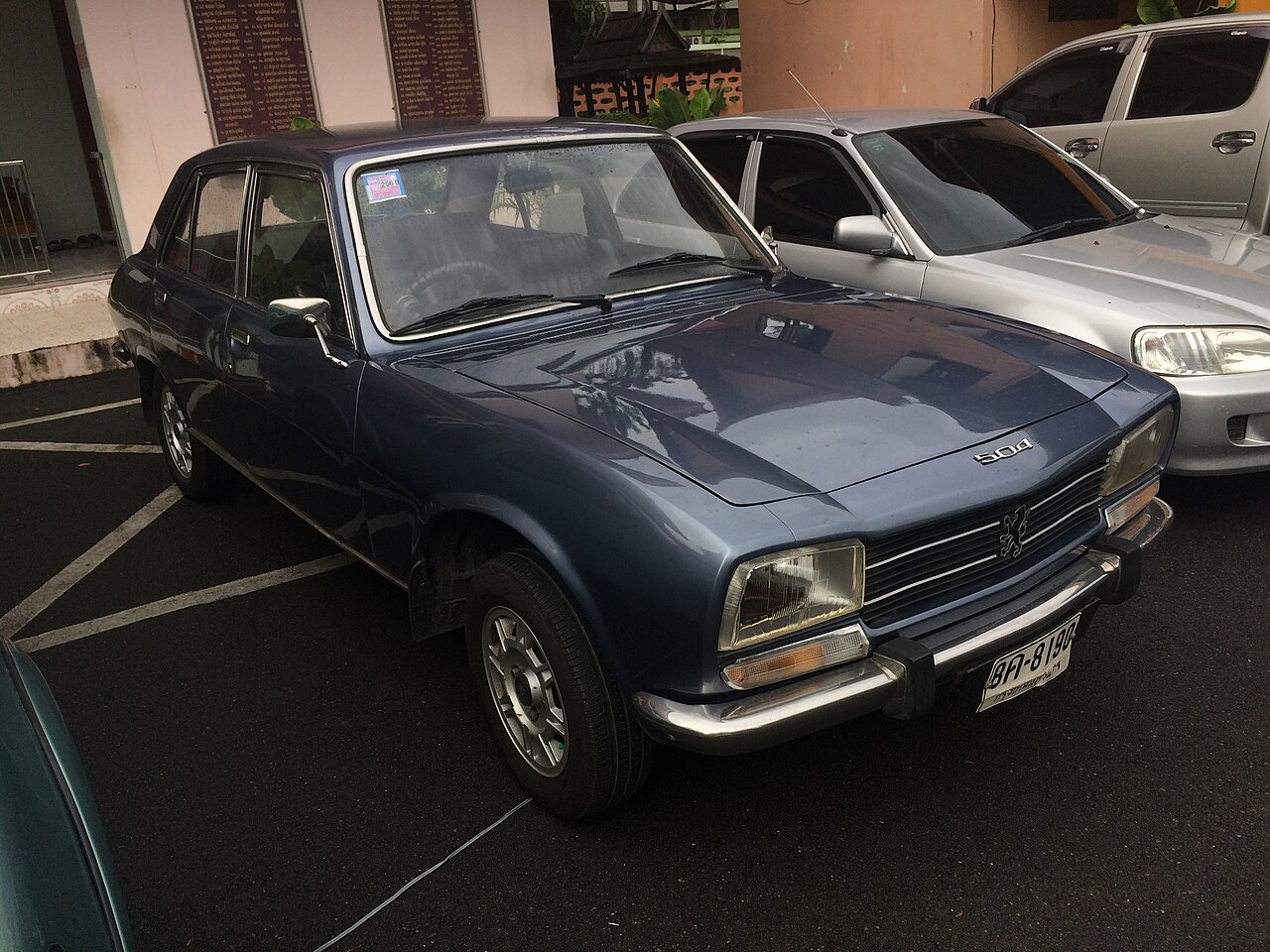
The foundational body style — four-door, front-engine, rear-wheel-drive. Launched September 12, 1968. Styled by Aldo Brovarone at Pininfarina with the front end by Peugeot's internal team. Over 2.6 million European units built.
Design studies began in 1963 under Maurice Jordan. A competition was held between Pininfarina's Turin studio and Peugeot's internal team (Paul Bouvot, Gérard Welter, Jean-Pierre Prodeau). The final car combined Pininfarina's rear and trunk treatment — described as giving the car "the eyes of Sophia Loren" — with the internal team's front end.
The distinctive trunk "break" (the sharp crease where the roofline meets the boot lid) was controversial at launch but became one of the car's defining features. The launch was delayed from June 1968 to September 12, 1968, by the May 1968 general strike at Sochaux.
Responding to the oil crisis, Peugeot introduced the 504 L in April 1973 — a simplified sedan with a live rear axle (the only sedan to use one), drum rear brakes, and a detuned 79 PS engine. The only sedan variant to delete the independent rear suspension.
| Trim | Notes |
|---|---|
| L | Entry-level; basic equipment |
| GL | Standard specification; most common variant |
| GR | Mid-range |
| SR | Higher specification |
| Ti | Top petrol; Kugelfischer injection, 104 PS |
| Engine | Displacement | Power |
|---|---|---|
| XM | 1,796cc petrol | 82–97 hp |
| XN | 1,971cc petrol | 93–104 PS |
| XD88 | 1,948cc diesel | 49–68 PS |
| XD90 | 2,112cc diesel | 48–65 PS |
The 504 won Europe's top award in its first full year — 119 points vs 77 for the BMW 2500/2800. Praised for styling, build quality, chassis, ride, and visibility.
| Market | Years | Units |
|---|---|---|
| France / Europe | 1968–1983 | 2,644,326 |
| Nigeria (PAN) | 1975–2006 | 425,000 (all variants) |
| Argentina (SAFRAR/Sevel) | 1969–1999 | ~500,000 (all variants) |
| Kenya | 1975–2004 | 27,000 (all variants) |
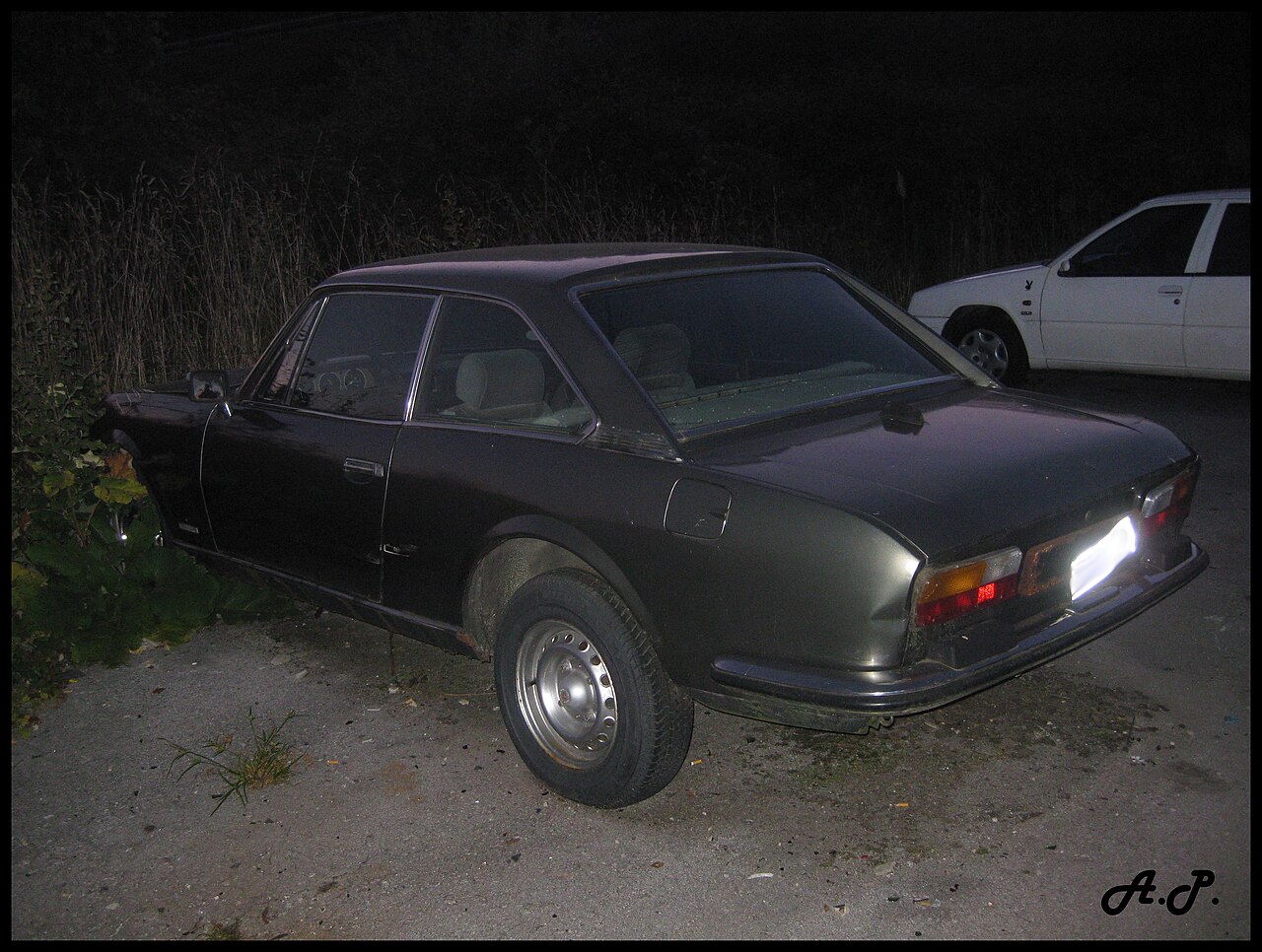
Two-door grand tourer designed and bodied by Pininfarina. Introduced at the Geneva Salon, March 1969. Quad rectangular headlights, clean surfaces, curved hips — deliberately understated elegance. The 1978 Safari Rally winner.
Styled by Franco Martinengo at Pininfarina. The bodyshells were built in Turin and shipped to Sochaux for final assembly. Martinengo — due to retire in 1970 — considered this a capstone project. The coupé's wheelbase is 190 mm shorter than the sedan's, and its rear track is wider.
Phase 1 (1969–1974): XM 1.8L four-cylinder, carburetted and injected.
Phase 2 (1971–1977): XN 2.0L, 96–104 PS. Reintroduced October 1977.
Phase 3 (1974–1983): PRV V6, 136 PS rising to 144 PS with K-Jetronic injection (from 1977). 5-speed gearbox from 1977.
Jean-Pierre Nicolas and Jean-Claude Lefèbvre won the East African Safari Rally in a 504 V6 Coupé. That same year Nicolas won the Bandama Rally in the same car.
| Variant | Units |
|---|---|
| 4-cylinder manual | 14,583 |
| 4-cylinder automatic | 2,163 |
| V6 carburetted | 4,472 |
| V6 injection | 1,157 |
| Total Coupé | ~22,375 |
| Measurement | Value |
|---|---|
| Wheelbase | 2,550 mm (100.4 in) |
| Length | 4,360 mm (171.7 in) |
| Width | 1,700 mm (66.9 in) |
| Height | ~1,360 mm |
| Front track | 1,490 mm |
| Rear track | 1,430 mm |
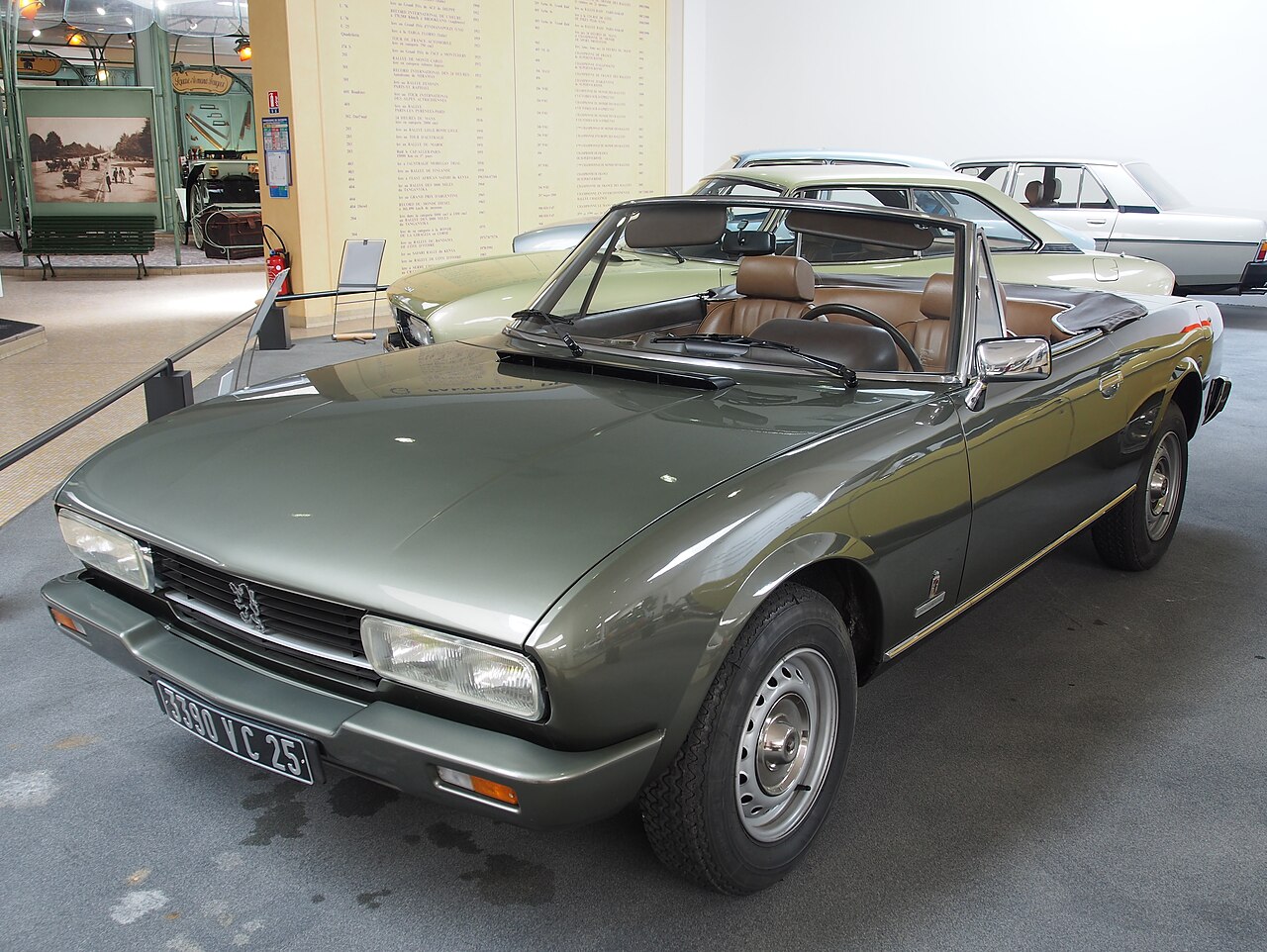
Open-top convertible — arguably the most desirable 504 variant. Designed by Franco Martinengo, introduced at Geneva in March 1969 alongside the Coupé. The V6 Cabriolet, built in only 977 examples, is among the most collectible French cars of the era.
The Cabriolet shares its body structure, wheelbase, and mechanicals with the Coupé, but the open body makes it fundamentally more involving to drive. The V6 Cabriolet was discontinued in 1977 (while the V6 Coupé ran to 1983), making the 977 V6 Cabriolets extraordinarily rare.
The "Monte Carlo" dashboard treatment was found on late-production Cabriolets. Final production models are sometimes called "Grande Finale" examples by collectors.
The bodywork is more susceptible to corrosion than the sedan given the Italian production environment. Trim components for two-door models are difficult to source. See the Restoration guide for details.
| Variant | Units |
|---|---|
| 4-cylinder manual (Series 1) | 5,848 |
| 4-cylinder manual (Series 2) | 1,071 |
| 4-cylinder automatic | 292 |
| V6 Cabriolet | 977 |
| Total Cabriolet | ~8,188 |
Project cars from ~£872 · Average ~£16,029 · V6 Cabriolet up to £43,515. Only ~60 live listings at time of data collection.
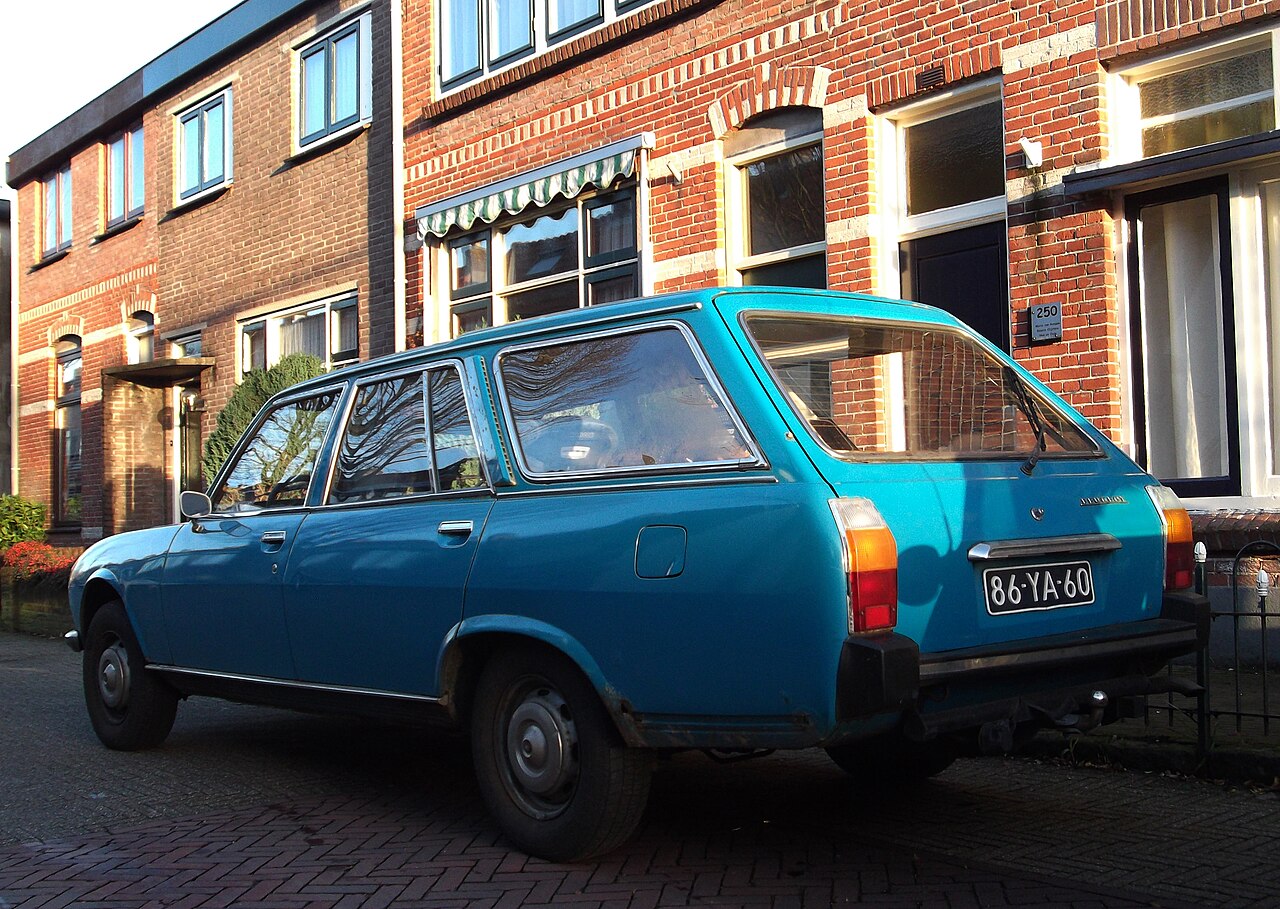
Five-door estate entering production in 1970. The Familiale adds a third row of seats for 7-passenger capacity. Both designed in-house at Peugeot — not Pininfarina. The Break became the primary bush taxi vehicle across West Africa.
Unlike the sedan and two-door variants, the Break and Familiale use a live rear axle with coil springs rather than semi-trailing arm independent rear suspension. This suits heavier loads and is simpler to maintain — a key practical advantage for fleet and commercial use.
A distinct variant — the Break Riviera — was designed by Pininfarina and represented a more luxurious, stylish estate offering in limited production.
The Break estate became particularly important in Africa, where its body made it the primary cross-border bush taxi vehicle. Capable of carrying more passengers than the sedan, it has remained in active commercial use across West Africa — Mauritania, Senegal, Mali, Burkina Faso, Guinea — long after European production ended.
| Model | Config | Capacity |
|---|---|---|
| Break | 5-door estate | 5 passengers |
| Break SL | Upgraded Break | 5 passengers |
| Familiale | 5-door + 3rd row | 7–8 passengers |
| Commerciale | Commercial estate | — |
| Break Riviera | Pininfarina luxury estate | Limited |
In Australia, only the sedan was locally assembled (by Renault at Heidelberg). Break and Familiale models were imported fully built-up from France.
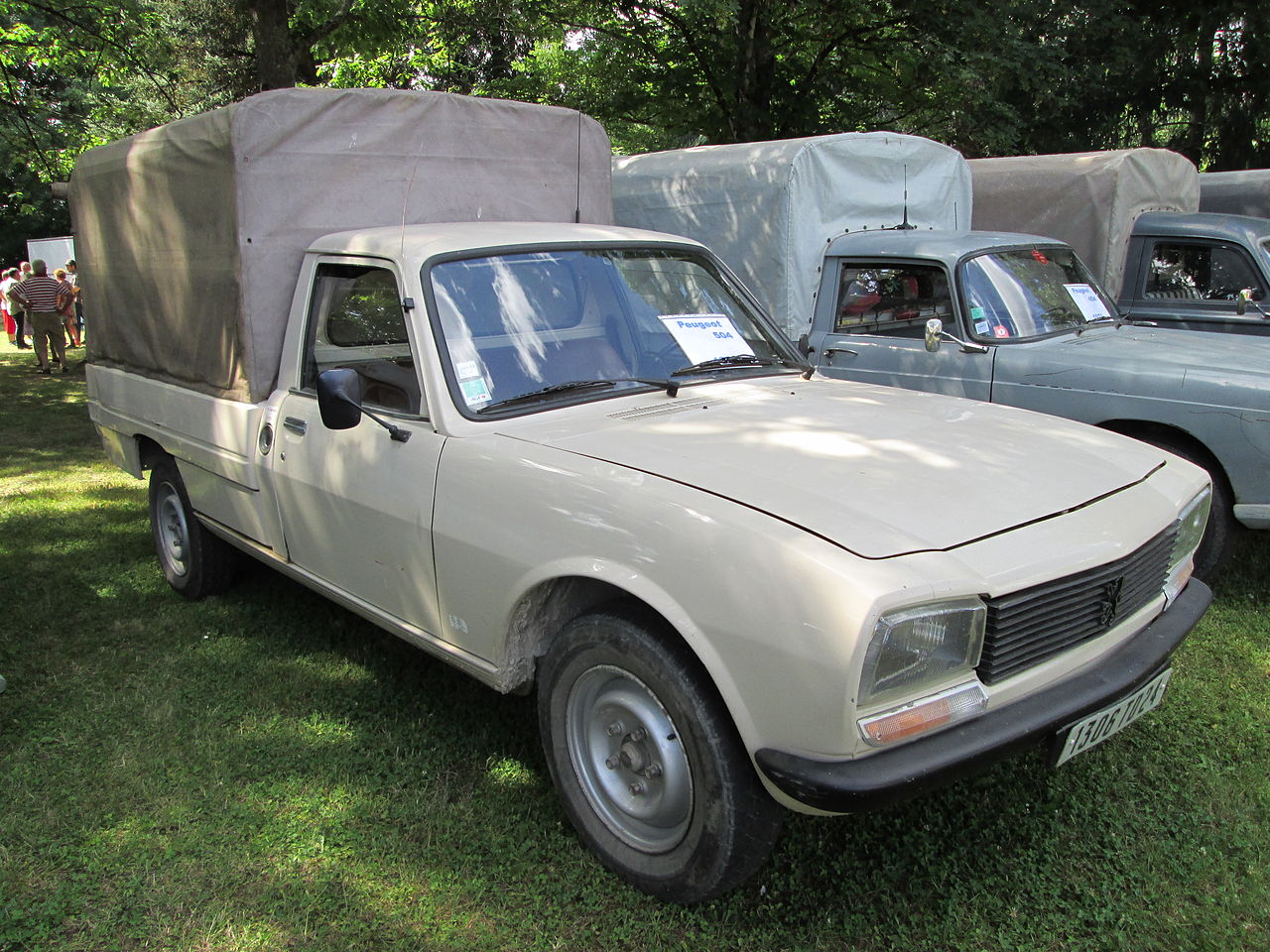
Commercial derivative sharing the Break's long wheelbase (2,900 mm) and live rear axle. Introduced in Europe in 1980. The Dangel 4×4 conversion (from 1981) was Peugeot's first-ever 4×4 vehicle. Built in Nigeria to 2006.
From July 1981, coachbuilder Dangel offered a four-wheel-drive conversion of the Pickup — Peugeot's first-ever 4×4 vehicle. Initially sold to French Gendarmerie, fire services, and Électricité de France before becoming available publicly.
| Spec | Value |
|---|---|
| Drive | Permanent 4WD |
| Ground clearance | 210 mm |
| Approach angle | 53° |
| Departure angle | 41° |
| Top speed | 146 km/h |
| Kerb weight | 1,525 kg |
| Pickup units | 3,186 |
| Break 4×4 units | 1,442 |
| Region | Years |
|---|---|
| France / Europe | 1980–1993 |
| Dangel 4×4 | 1981–1994 |
| Nigeria | ~1980–2006 |
| Argentina (incl. double cab) | 1983–1997/1999 |
| China (crew cab) | 1989–1997 |
Sevel Argentina produced a double cab pickup variant not sold in Europe — specific to Argentine market requirements. ~92,000 pickups built total.