Design Heritage
The Makers
The designers, engineers, and drivers who shaped the Peugeot 504's legacy.
Design Heritage
The designers, engineers, and drivers who shaped the Peugeot 504's legacy.
Carrozzeria Pininfarina
Two separate Pininfarina designers created the 504 family — one responsible for the sedan body that sold millions, the other for the two-door variants that became timeless works of art. Their attribution is sometimes confused: in 2007, Brovarone himself confirmed that he did not design the Coupé or Cabriolet.
Sedan Designer
Aldo Brovarone was an Italian automobile designer and the chief stylist at Carrozzeria Pininfarina from 1974 to 1988. He is credited with styling the Peugeot 504 sedan — one of the most commercially important designs of his career. A quiet, meticulous designer, he is sometimes called "the quiet master of elegance" for work that prioritised refinement over ostentation.
The design was the result of a competition between Pininfarina and Peugeot's internal team (Paul Bouvot, Gérard Welter, Jean-Pierre Prodeau). The final production car combined Pininfarina's rear and trunk treatment — Brovarone's contribution — with the front end finalised by Peugeot's internal designers. A Peugeot executive described the result as giving the car "the eyes of Sophia Loren."
| Period | Role |
|---|---|
| ~1950s | Joined Carrozzeria Pininfarina |
| 1974–1988 | Chief Stylist, Pininfarina |
| 2020 | Died |
Brovarone confirmed in 2007 that he did not design the 504 Coupé or Cabriolet. Those were designed by Franco Martinengo. This distinction is sometimes confused in secondary sources.
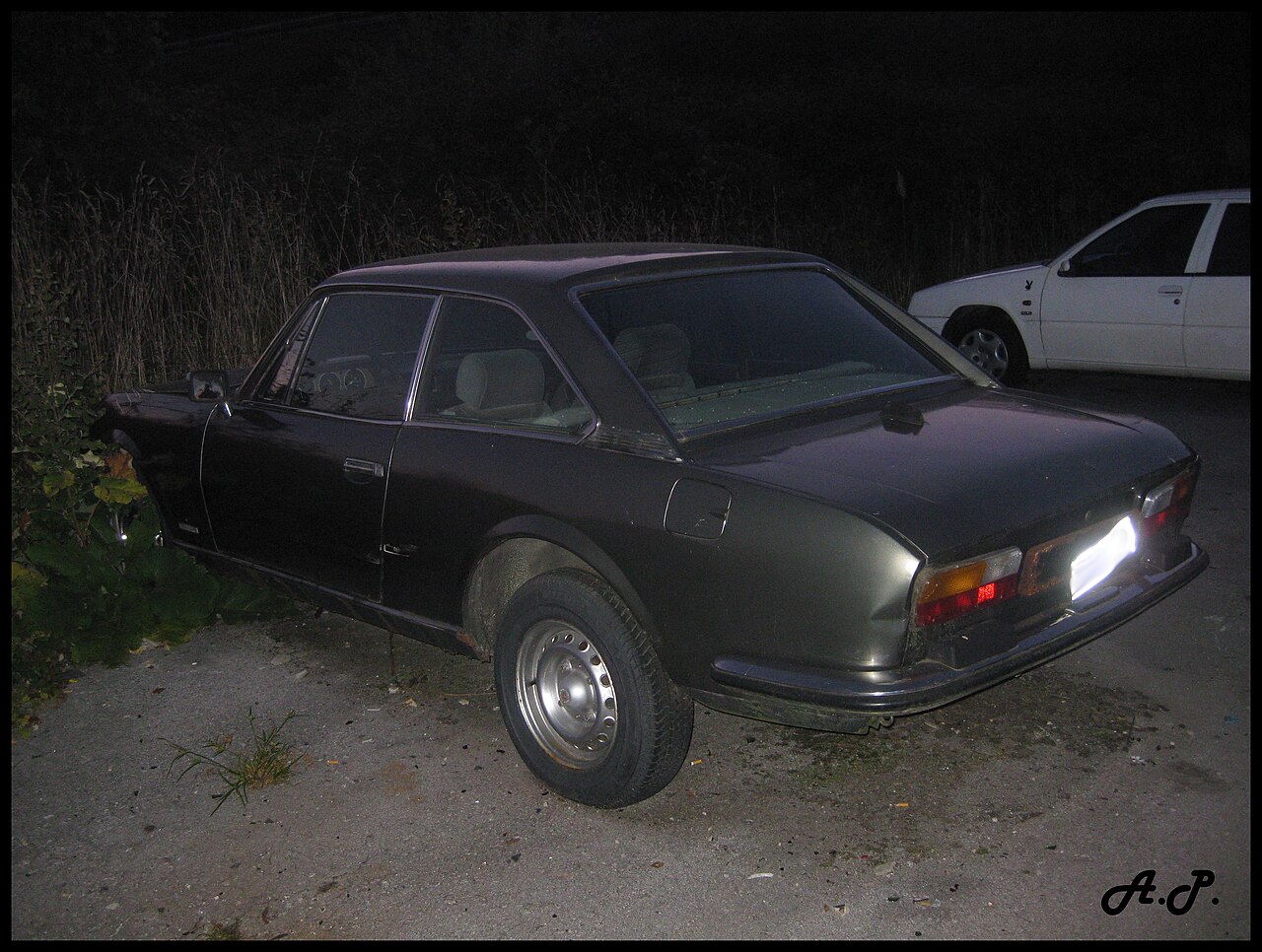
Coupé & Cabriolet Designer
Franco Martinengo was an Italian automobile designer at Carrozzeria Pininfarina who designed both the Peugeot 504 Coupé and Cabriolet — widely regarded as among the most beautiful cars of the 1970s. Having worked with Giovanni Battista Farina since the 1920s, Martinengo was due to retire around 1970, making the 504 two-door designs a distinguished capstone to a remarkable career.
Both cars were introduced at the Geneva Salon in March 1969. Pininfarina not only designed them but also built the bodyshells in Turin, shipping them to Sochaux for final assembly. The design — quad rectangular headlights, clean unadorned surfaces, curved hips — was an immediate critical success and has aged exceptionally well.
| Year | Event |
|---|---|
| 1910 | Born in Turin |
| Accademia Albertina | Studied at the Accademia Albertina di Belle Arti, Turin |
| 1928 | Joined Stabilimenti Farina (Giovanni Battista "Pinin" Farina's coachbuilding firm) — drafting skills immediately recognised |
| Post-war | Period as design director |
| 1951 | Called to Carrozzeria Pinin Farina as director of project and research department |
| 1952–1970 | Director, Centro Stile at Pininfarina — 18 years |
| March 1966 | Alfa Romeo Duetto prototype exhibited at Geneva — his penultimate major automotive work |
| March 1969 | 504 Coupé and Cabriolet revealed at Geneva Salon — his last automotive works |
| Post-1970 | Retired from automotive design; devoted himself to painting (a parallel career since 1940; exhibited nationally and internationally) |
| 2001 | Died, November 5 |
Martinengo maintained a parallel career as a fine artist since 1940, exhibiting nationally and internationally. He was also a first cousin of Pope Francis (Jorge Mario Bergoglio). When Pinin Farina transferred management to his son Sergio and son-in-law Renzo Carli, he entrusted the Centro Stile direction to Martinengo for 18 years — one of the longest tenures in Pininfarina history.
The 504 Coupé and Cabriolet are considered benchmark examples of restrained Italian coachbuilding. They influenced the visual language of 1970s French cars and remain highly collectible — the V6 Cabriolet (977 units) is among the most prized French cars of its era.
Motorsport
The 504's rally success was built on the talent of drivers and co-drivers who trusted the car's durability and chassis on some of the world's roughest terrain.
Most Successful 504 Rally Driver
The most successful 504 rally driver, accounting for at least four major victories:
The 1978 Safari win in the V6 Coupé marked the apex of 504 competition development — combining 144 PS of PRV V6 power with the chassis's legendary durability.
From Co-Driver to FIA President
Jean Todt co-drove for Hannu Mikkola in the 1975 Rallye du Maroc victory — one of the three wins in the historic 1975 treble. This was part of Todt's early rallying career.
His subsequent career saw him become:
His co-driving seat in a 504 was the starting point of one of motorsport's most storied careers.
Ove Andersson (with Arne Hertz) drove the 504 sedan to the 1975 East African Safari Rally victory — the first of the historic treble wins. Hannu Mikkola drove the Morocco leg of the same treble with Jean Todt. Both were among the top World Rally drivers of their era.